
Key Takeaways
-
A mini mesh chain link fence uses a much smaller mesh size, often 1/2” x 1/2”, 5/8” x 5/8”, or 3/4” x 3/4”, compared with a regular chain link fence with 2” openings.
-
High security mini mesh is ideal for prisons, substations, data centers, bridges, highways, military use, and other sites where intrusion risk is high.
-
Mini mesh chain link fabric can be galvanized, aluminized, extruded, or vinyl coated for long-term corrosion resistance in harsh outdoor environments.
-
Mini mesh chain link fences are available in a wide range of heights, gauges, and finishes, allowing for tailored solutions to meet specific fencing needs.
-
This guide covers benefits, specifications, material options, applications, installation tips, and maintenance basics for choosing the right mini mesh fence system.
A standard chain link fence is useful for marking boundaries. But when you need to keep intruders out, prevent climbing, protect crops or equipment, and keep pedestrians safe, standard openings are often not enough.
That is where mini mesh chain link becomes valuable. Its small mesh openings create a dense, durable wire mesh fence that maintains visibility while providing security, making it a practical choice for residential, commercial, agricultural, industrial, and federal projects.
What Is Mini Mesh Chain Link Fence?
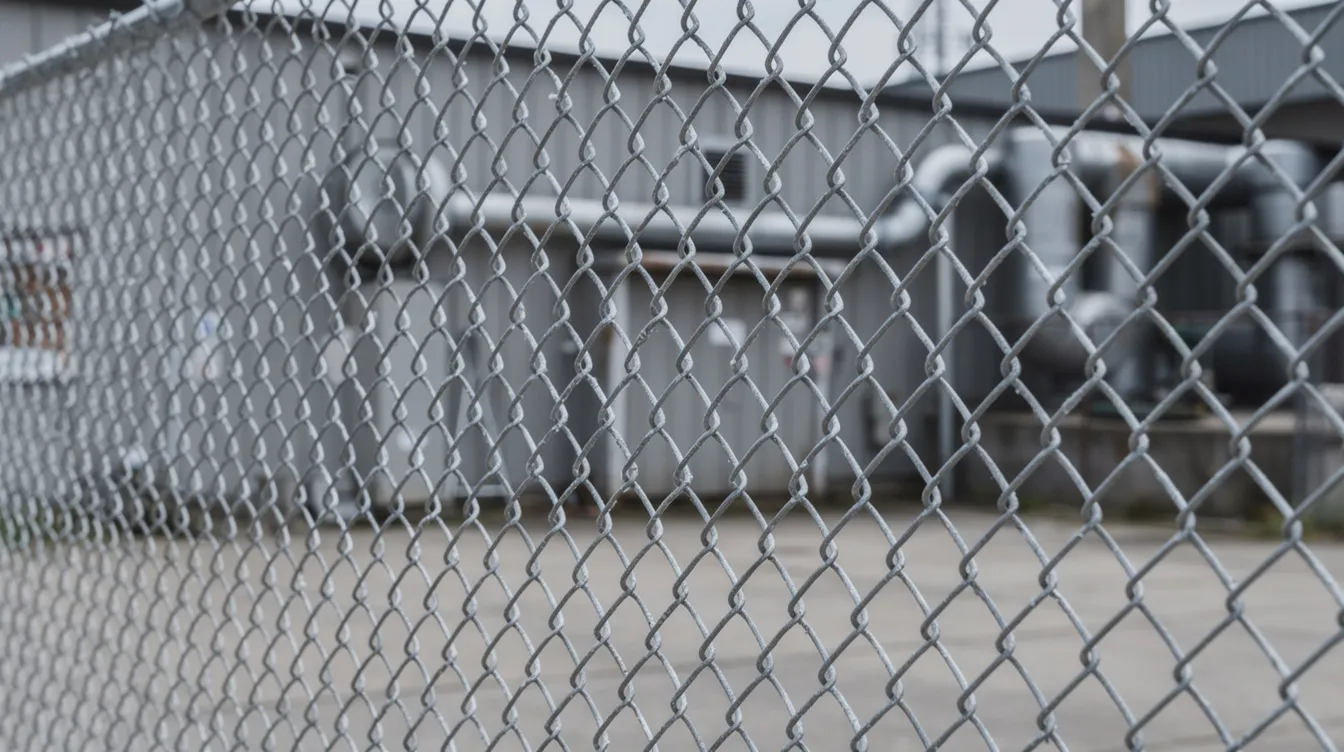
A mini mesh chain link fence is a type of mesh chain link fabric made with reduced diamond openings, such as 1/2” x 1/2” or 5/8” x 5/8”, instead of the wider 2” openings used in a regular chain link fence. The tighter mini mesh pattern creates a denser barrier that is extremely difficult to climb, pry open, or cut with common tools.
This fence style is woven from steel wire into diamond-shaped openings, then protected with a finish such as galvanized zinc, aluminized coating, or vinyl coated PVC. You may also see it described as mini mesh, chain link mini mesh, mini mesh chain, high security mini mesh, mesh chain link, chain link fence mini, or link fence mini mesh.
-
Mini mesh chain link uses smaller diamond openings than standard chain link.
-
The small mesh design reduces footholds for shoes, hands, paws, and climbing tools.
-
The tighter woven structure helps resist bolt cutters, saws, and prying pressure.
-
Mini mesh fencing maintains airflow and sunlight, which is beneficial for plants in gardens, yards, nurseries, and agricultural areas, while still delivering many of the core benefits of a chain link fence such as durability and low maintenance.
-
Mini mesh fencing completely prevents small animals from escaping or invading yards, while standard chain link does not.
Because the mesh is tighter but still open, wind passes through the mini mesh design. This helps prevent structural failures during heavy storms common to solid barriers, while still creating a formidable barrier against intruders.
Key Features of High Security Mini Mesh
The value of high security mini mesh comes from a combination of smaller openings, stronger wire, and a heavier supporting framework.
-
Common mini mesh opening sizes include 1/2” x 1/2”, 5/8” x 5/8”, 3/4” x 3/4”, and sometimes 1” or smaller depending on the application.
-
Smaller mesh openings mean higher security because they reduce the space available for hands, feet, tools, and animal paws.
-
The smaller link size of mini mesh chain link fences makes them effective in preventing climbing by both humans and animals, making them suitable for residential and commercial properties.
-
Mini mesh chain link fences are designed with smaller links, making it difficult for intruders and animals to climb over them, thus enhancing security.
-
The smaller mesh size of mini mesh chain link fences makes them virtually impossible to cut with standard bolt cutters, providing an additional layer of security.
-
In demanding sites, this does not make a fence an impenetrable high defense barrier by itself, but it does make forced entry extremely difficult when paired with proper posts, rails, gates, and tamper-resistant hardware.
-
The tight mesh makes it difficult to cut, pry, or spread because common bolt cutters cannot get the same leverage they can on larger 2” chain link openings.
-
Mini mesh offers strong anti-climb performance because footwear, fingers, and animal claws cannot easily crawled into the small mesh openings.
-
Compared with standard chain link, the surface can feel smoother and less snag-prone, which matters around correctional staff, industrial jobs, and pedestrian walkways.
-
Common gauges for mini mesh chain link fabric include 6 gauge, 9 gauge, 11 gauge, and 12 gauge, each offering different wire diameters suitable for various applications.
-
Typical high security projects often use 9 gauge, 8 gauge, or heavier options; lower gauge numbers mean a larger wire diameter and stronger wire.
-
Constructed from heavy-duty steel wire, mini mesh fencing provides superior impact resistance.
-
Heavy duty wire and heavy duty framework are important for prisons, substations, military facilities, and heavy industry sites.
-
Mini mesh chain link fencing often meets strict local pool safety codes due to its climb-resistant nature and small openings.
-
Mini mesh chain link fences meet various American Society for Testing and Materials (ASTM) and American Association of State Highway and Transportation Officials (AASHTO) specifications, ensuring they are suitable for high-security applications.
-
Many project specifications reference ASTM A392 for zinc-coated steel chain link fence fabric, especially where commercial or security performance is required.
-
The standard mill diameter tolerance for mini mesh chain link fabric is + or – .005 inches, which is important for ensuring proper installation and functionality.
Materials, Coatings, and Chain Link Fabric Options
Material and finish choices affect corrosion resistance, appearance, price, and long-term performance. The right choice depends on climate, security level, visibility needs, and how much maintenance the property owner wants to avoid.
-
Galvanized mini mesh chain link uses hot-dipped zinc coating to protect steel wire from rust. It is commonly used for highways, bridges, commercial yards, industrial sites, and general security fencing.
-
Heavy-gauge galvanized or vinyl-coated steel used in mini mesh fencing resists rust, corrosion, and wear.
-
Aluminized mini mesh chain link fabric uses an aluminum-based coating that offers strong corrosion resistance and a bright silver appearance. It is often selected for humid, coastal, or industrial environments.
-
Aluminum mini mesh chain link fences are known for their corrosion resistance, light weight, and minimal maintenance requirements, making them a popular choice in various applications.
-
Vinyl coated mini mesh uses a steel core wire covered with PVC. It is available in colors such as black, green, and brown for a cleaner look around parks, homes, schools, and public-facing facilities, similar to many vinyl fencing options for residential and commercial properties.
-
Customization options for mini mesh chain link fences include the ability to select specific colors and finishes, such as aluminized, extruded, galvanized, and fused and bonded finishes.
-
Mini mesh chain link fences are available in various finishes including aluminized, extruded, galvanized, and fused and bonded, all of which are designed for durability and long-lasting performance.
-
Extruded vinyl coating is applied over the wire as a protective PVC layer. Fused and bonded vinyl coating is bonded more tightly to the wire and is generally considered a more durable long-term finish.
-
A corrosive resistant finish is especially important near salt air, chemical exposure, irrigation systems, or heavy industrial emissions.
-
Mini mesh chain link fabric is supplied in rolls, often in 25 ft, 50 ft, or longer roll lengths depending on height, gauge, and weight.
-
Common heights include 4 ft, 6 ft, 8 ft, 10 ft, and 12 ft, with taller custom rolls available for high security projects.
-
Mini mesh fencing does not require painting, staining, or sealing, offering minimal upkeep compared to wood options.
Note: When comparing price, do not look at fabric alone. A mini mesh fenced area also needs matching posts, rails, tension wire, gates, bands, fittings, and labor.
For urban or residential projects, black vinyl coated mesh can blend into landscaping and keep a lovely family yard looking clean. For industrial jobs, galvanized or aluminized mesh may be the more practical choice because it is durable, visible, and cost-effective, fitting well within broader commercial and industrial fencing strategies.

Typical Applications for Mini Mesh Chain Link Fences
High security mini mesh is used across commercial, governmental, agricultural, and residential projects where standard chain link is not enough. It protects people, property, equipment, animals, and restricted areas without fully blocking visibility.
-
Correctional facilities and prisons: Mini mesh chain link fences are used to deter escape, reduce climbing, and limit contraband passing through the fence.
-
Military facilities: Mini mesh chain link fences are used in a variety of applications including highways, bridges, prisons, and military facilities due to their high-security features.
-
Military bases and armories: For military use, the tight mesh helps protect entry points, training areas, storage yards, and perimeter zones where unauthorized access must be controlled.
-
Transportation infrastructure: Highways, bridges, overpasses, rail yards, and airports use mini mesh to reduce climbing, protect pedestrians, and prevent objects from being thrown into traffic areas.
-
Utilities and data sites: Electrical substations, water treatment plants, telecom hubs, and data centers often use chain link mini mesh to create a secure perimeter while preserving visibility for cameras and patrols.
-
Heavy industry and industrial yards: Refineries, warehouses, ports, equipment yards, and manufacturing plants use heavy duty mini mesh to protect assets and reduce liability.
-
Residential properties: A mini mesh chain link fence can secure pools, dog runs, backyard play areas, and gardens while keeping the property safe without creating a solid wall, and it can complement other pool fence and safety hardware solutions where water features are present.
-
Commercial properties: Schools, parking lots, distribution centers, retail back areas, and storage facilities use mini mesh chain link to reduce unwanted entry and vandalism.
-
Agricultural applications: Mini mesh chain link fencing is often chosen for agricultural applications to protect crops and livestock from intruders and unwanted animals.
-
Forestry and wildlife control: Forestry projects, nurseries, orchards, and habitat management areas use small mesh to reduce damage from pests and protect young plants.
-
Kennels and animal enclosures: The smaller openings keep paws, snouts, and claws from getting stuck, while also keeping unwanted animals out, while some owners may also consider aluminum fencing as a great option for dogs in certain yard layouts.
Mini mesh fencing maintains visibility while providing security, creating a formidable barrier against intruders. That balance is why engineers often specify mesh chain solutions where cameras, lighting, airflow, and line-of-sight matter as much as perimeter strength.
Design Considerations: Height, Gauges, and Mini Mesh Size
The right fence is not just about choosing the smallest mesh. Designers must match height, mesh size, wire diameter, finish, framework, gates, and local requirements to the real threat level on site.
-
Fence height: Common high security heights include 6 ft, 8 ft, and 10–12 ft. Sites with higher risk may add barbed wire, razor wire, outriggers, or anti-climb toppings where codes allow.
-
Mesh size: A 1/2” mesh gives stronger anti-climb and anti-cut performance than 3/4” mesh, while 3/4” may reduce cost and weight for moderate-risk locations.
-
Wire gauges: 6 gauge, 9 gauge, 11 gauge, and 12 gauge are common choices. A 6 gauge wire is much heavier than 11 or 12 gauge, but it increases cost, roll weight, and installation effort.
-
Security level: Smaller mesh openings are preferred for maximum anti-climb and anti-cut performance in prisons, embassies, utility sites, and critical infrastructure.
-
Codes and standards: Check local codes, pool safety rules, federal project requirements, transportation specifications, ASTM standards, and AASHTO requirements before selecting chain link fabric.
-
Framework: Mini mesh fabric is heavier than standard chain link fabric, so the framework must match the load. Taller fences often need larger posts, stronger wall pipe, deeper concrete footings, and reinforced gate posts.
-
Gates: A strong fence can fail at a weak gate. Gate frames, hinges, latches, and locks should match the same security level as the mesh chain.
-
Finish and color: Galvanized silver is common for highways and industrial sites. Black or green vinyl coated fabric can blend into landscaping or reduce visual impact in residential and public areas.
-
Safety: Knuckled selvage can reduce sharp edges in pedestrian zones, while twisted or barbed selvage may be selected for high security areas where allowed.
-
Budget: Mini mesh costs more than regular chain link fence because it uses more wire, more fittings, heavier posts, and more labor to stretch and secure.
Here is a simple way to think about selection:
Project type
Typical priority
Suggested direction
Residential dog run or garden
Animal control and appearance
1/2” to 3/4” mesh, vinyl coated or galvanized
Pool enclosure
Climb resistance and code compliance
Small mesh openings, code-approved height and gates
Commercial yard
Theft deterrence and durability
9 gauge or heavier, galvanized or vinyl coated
Substation or data center
High security
1/2” mesh, heavy gauge wire, tamper-resistant fittings
Prison or military perimeter
Maximum perimeter control
High security mini mesh, heavy duty framework, topping where permitted
The goal is not to buy the most expensive fence. The goal is keeping the right people, animals, tools, and vehicles on the correct side of the line.

Installation, Maintenance, and Longevity
Correct installation ensures that the mini mesh chain link fence delivers its intended security and service life. Even the strongest commercial chain link fencing fabric can sag, loosen, or become vulnerable if the posts, rails, and fittings are not installed properly, just as with any standard chain link fence system.
-
Set terminal posts first: Corner, end, and gate posts carry the most force and should be sized and concreted for the fence height, soil, wind exposure, and fabric weight.
-
Install line posts and rails: Line posts must be spaced correctly and aligned so the mesh stretches evenly along the run, similar to the framework used for ornamental steel fencing systems.
-
Attach tension bands and tension bars: These components help transfer pulling force into the terminal posts.
-
Stretch the mini mesh chain link fabric: Proper fabric tension is essential. Slack mesh can create footholds, weak spots, and easier pry points.
-
Tie all edges securely: Use proper tie wire, tension wire, rails, or bottom supports to secure the fabric along the top, bottom, and line posts.
-
Use tamper-resistant fittings: High security sites should use vandal-resistant bands, bolts, nuts, hinges, and gate hardware.
-
Protect the bottom: A bottom tension wire, rail, curb, or buried skirt can reduce digging, lifting, and animal entry.
-
Inspect periodically: Look for loose ties, damaged fabric, rust spots on galvanized surfaces, cracked vinyl coating, bent posts, and compromised gates.
-
Repair quickly: Damaged chain link fabric can often be replaced in short sections without removing an entire fence line, but the replacement mesh size, gauge, and finish should match the existing fence.
-
Keep it clean: Galvanized and vinyl coated mini mesh typically provide many years of service when installed correctly, with minimal cleaning needed beyond occasional debris removal, especially when paired with other modern low-maintenance fencing solutions.
Mini mesh chain link fencing is not maintenance-free, but it is low maintenance. Unlike wood, it does not need painting, staining, or sealing. With the correct material, coating, and framework, a mini mesh fence system can provide long-term security and peace of mind for a residential property, commercial site, farm, bridge approach, industrial yard, or federal facility.
FAQ
How does mini mesh chain link compare to standard 2” chain link for security?
Mini mesh uses much smaller openings than standard 2” chain link, which significantly improves cut resistance and makes the fence far harder to climb. The tighter openings reduce leverage for bolt cutters and limit footholds for shoes, hands, and animal paws.
For sensitive areas such as detention facilities, substations, military sites, and data centers, mini mesh is often specified instead of standard chain link because it reduces common breach methods.
Can a vinyl coated mini mesh fence last as long as galvanized mini mesh?
Yes. High-quality vinyl coated mini mesh generally has a galvanized steel core beneath the PVC, giving it both zinc and plastic protection against corrosion.
In many environments, especially urban, humid, or coastal settings, vinyl coated mini mesh can match or exceed the service life of bare galvanized fabric when properly installed. The key is choosing a durable coating, such as fused and bonded PVC, and inspecting the fence for cracks or cuts over time.
Is mini mesh chain link suitable for small animal enclosures and kennels?
Yes. Mini mesh is ideal for dog runs, kennels, wildlife enclosures, and garden protection because the small openings prevent paws, snouts, and claws from getting stuck or gaining leverage.
The tighter mesh also helps keep out smaller predators and pests, making it popular for high-value gardens, poultry areas, small livestock spaces, and residential yards where unwanted animals are a concern.
Can existing chain link fences be upgraded to mini mesh for higher security?
In many cases, existing line posts and framework can be reused if they are strong enough, and the standard chain link fabric can be replaced with mini mesh chain link fabric.
However, mini mesh material is heavier than standard fabric. A professional assessment is recommended to confirm that post spacing, foundation depth, rail strength, gate hardware, and terminal posts are adequate for the added weight and tension.
What information do I need to request a quote for mini mesh chain link fabric?
To request an accurate quote, prepare these details:
-
Required fence height
-
Total linear footage
-
Preferred mini mesh opening size
-
Wire gauge
-
Finish choice, such as galvanized, aluminized, extruded, or fused and bonded vinyl coated
-
Color preference
-
Roll length requirements
-
Gate sizes and entry points
-
Project type, such as prison, industrial yard, agricultural property, residential kennel, highway, or bridge
-
Site conditions, including slope, soil, corrosion exposure, and security level
The more complete the specifications, the easier it is for a supplier or installer to recommend the right package of chain link fabric, framework, fittings, gates, and accessories. If your goal is a durable, high security link fence that keeps your property safe, mini mesh chain link is one of the strongest and most flexible options available.